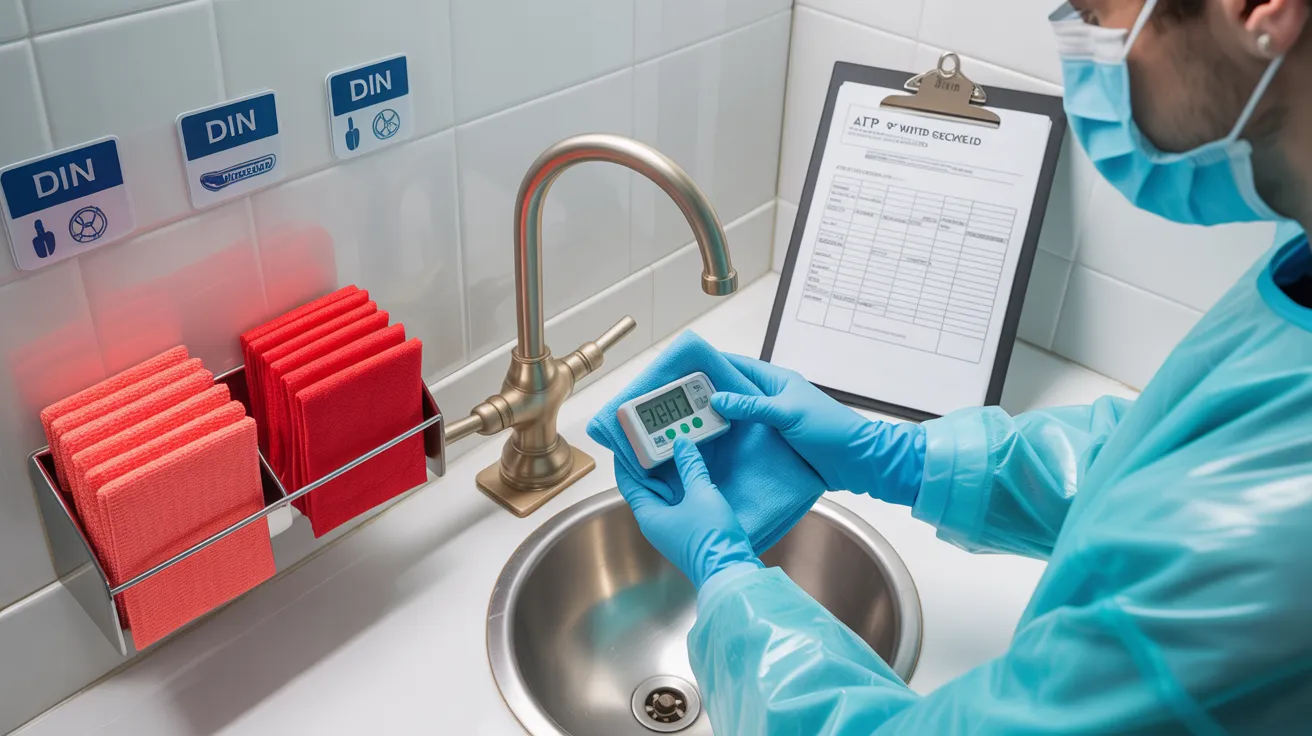
You need trustworthy janitorial cleaning in Brampton that's based on documented SOPs conforming to WHMIS/CSA, daily QA inspections with scored checklists, and timestamped task logs. Look for DIN-registered disinfectants with verified dwell times, color-coded microfiber, HEPA filtration, and calibrated equipment. Service providers must fulfill OHSA and Peel Region requirements, keep SDS access, and track KPIs like complaint rate, rework, and response time. Tailored plans, buffer-stocked supplies, and supervisor verification maintain sites audit-ready and spotless—discover how these controls translate into measurable results.
Critical Points
- Well-documented SOPs aligned with WHMIS/CSA, precision-calibrated equipment, and color-coded systems ensure consistent, safe cleaning across facilities in Brampton.
- Standard QA inspections with scored checklists, timestamped logs, and KPI dashboards avoid service drift and provide transparent performance.
- Location-specific plans map duties, residence times, floor-care cycles, and equipment to each site's risk profile and traffic patterns.
- Operations focused on compliance: alignment with OHSA and Peel public health, Safety Data Sheet access, container labeling, audit procedures, and incident and corrective-action documentation ready for inspections.
- Qualified staff, verified with manager oversight, consistent SKUs and buffer stock, and planned maintenance minimize downtime and supply stockouts.
What Defines Janitorial Cleaning "Reliable" in Brampton
While vendors may promise spotless floors, dependability in Brampton's janitorial cleaning appears in quantifiable processes and reliable results. You can demand documented SOPs aligned to WHMIS and CSA, periodic QA reviews with graded checklists, and timestamped logs for task completion. Reliable teams use consistent staffing, so you prevent crew retraining or forfeiting location familiarity. Managers confirm touchpoint disinfection frequencies, floor-care cycles, and washroom operational time against SLAs.
You also require consistent supplies: uniform SKUs, backup stock, and usage monitoring to avoid stockouts of liners, microfiber, and EPA-registered cleaning solutions. Calibrated equipment, coded tools, and servicing schedules lower microbial transfer and downtime. Open incident reporting, corrective-action timelines, and KPI dashboards-customer complaint rate, rework percentage, and turnaround time-establish control. This is how you ensure predictable cleanliness and minimized risk.
Core Services Every Brampton Business Should Anticipate
You can anticipate daily office cleaning that covers critical-contact disinfection, waste removal, and workstation reset to copyright uptime and brand standards. Restroom sanitation must meet health-code benchmarks with EPA-registered chemicals, verified contact times, and documented inspections. Floor care programs should specify strip-and-wax cycles, scrub-and-recoat intervals, and carpet extraction schedules customized for your traffic patterns and finishes.
Routine Office Cleaning
Performed systematically with care, daily office cleaning keeps Brampton workplaces productive, regulation-compliant, and polished. You receive high-touch surface disinfection, spotless glass surfaces, and vacuumed traffic lanes that manage dust and allergens. Crews manage workstation decluttering, empty trash containers, and align chairs to restore order before doors open. They tackle spills promptly, sanitize shared touchpoints, and reset the reception area so first impressions last.
We implement microfiber color-coding, HEPA filtration, and eco-certified cleaning products to adhere to local standards and preserve finishes. Work surfaces, keyboards, and telephones get strategic wipe-downs that minimize cross-contamination without harming equipment. After hours touchups manage late-day messes, making sure your team starts fresh every morning. Checklists ensure scope: lobby dusting, boardroom resets, kitchen surface cleaning, and supply checks. The result: fewer complaints, stronger brand image, and consistent uptime.
Restroom Sanitation Requirements
Regularly maintained restrooms anchor your Brampton facility's hygiene program and compliance. You need a written sanitation schedule that focuses on high-touch points-flush levers, faucet controls, dispenser units, latch mechanisms—every service visit. Technicians should use hospital-grade, DIN-registered disinfectants with correct dwell times and color-coded microfiber to avoid cross-contamination. Restroom odor control isn't just masking scents; it's source removal: biological drain maintenance, urinal screen rotation, grout treatment, vent cleaning, and sealed trash liners.
Every detail counts. Check fixture descaling, mirror and stainless finishing, and dispenser calibration to decrease waste. Include stall partition maintenance: degrease, disinfect copyrights and brackets, repair delamination, and touch up or swap out panels to maintain a professional, sanitary appearance. Enforce ATP or fluorescent marker audits, signed checklists, and incident logs. The result: improved occupant health, diminished concerns, and measurable cleanliness.
Floor Maintenance Programs
Though floor care often looks simple, an effective Brampton program is a well-organized system: planned sweeping and HEPA vacuuming, mechanical scrubbing with neutral or enzymatic cleaners suited to substrate, and scheduled restorative tasks including scrub-and-recoat, strip-and-finish, or diamond polishing for concrete and stone. You'll achieve measurable results by aligning chemistry, pads, and dwell times with each surface. For VCT, we monitor finish film build, burnish to target gloss, and schedule recoat cycles by traffic counts. For porcelain, ceramic, and natural stone, tile maintenance includes treatment with cylindrical brushes, selective grout restoration, and sealed protection to prevent resoiling. On LVT, we avoid acrylic finishes and use polyurethane-safe cleaners. We monitor slip resistance, ATP readings, and gloss levels, so your floors maintain consistency, last longer, and comply with safety standards.
The Importance of Consistent Quality Control
When quality control runs on a set cadence-daily inspections, documented checklists, and measurable KPIs-you avoid service drift, protect your facility assets, and reduce corrective costs. You also standardize outcomes across shifts and sites, so restroom hygiene, touchpoint disinfection, and waste handling stay consistent during peak use.
Utilize quality audits to verify SOPs, check dilution ratios, and ensure equipment maintenance logs. Associate findings to corrective actions with deadlines and photo verification. Monitor trend data by zone-lobbies, production areas, and back-of-house-to pinpoint root causes, not symptoms. Finish the loop with client feedback to confirm that visual standards, odor control, and uptime fulfill expectations.
This approach protects finishes, increases machine lifecycles, and reduces rework. Eventually, consistent oversight creates safer environments, consistent budgets, and higher occupant satisfaction.
Guidelines for Vetting and Selecting a Reliable Provider
Prior to signing any agreement, develop a short list using objective criteria: demonstrated sector experience in Brampton, WSIB clearance and liability coverage, documented SOPs conforming to ISSA/OS1 or GBAC standards, and a track record of meeting KPIs matching yours. Check supervisor-to-cleaner ratios, training intervals, and chemical/equipment inventories. Ask for data: inspection scores, rework rates, incident logs, and response times.
Interview operations leaders, not just sales. Request site-specific references and review client testimonials for service consistency, not just star ratings. Complete a compliance check: WHMIS training, police checks, and supply chain transparency. Insist on measurable SLAs with escalation paths. Scrutinize contract terms-scope, frequencies, exclusions, consumables, price-adjustment triggers, and termination rights. Test the service with a defined acceptance test before issuing the full term.
Customized Cleaning Plans for Different Facilities
Start by mapping each facility's risk profile and operational rhythm, then convert that into a scope-by-space plan. You'll determine cleaning frequencies, acceptable downtime, access protocols, and material sensitivities for each area-lobbies, production floors, classrooms, exam rooms, and kitchens. Construct task lists that specify procedures, dwell times, and sector specialized machinery: autoscrubbers for warehouses, HEPA uprights for offices, microfiber systems for clinics, low-moisture extraction for carpeted suites.
For offices, focus on touchpoint cycling, meeting-room refreshes, and post-tenant improvements turnover cleans. In retail, coordinate overnight detail work with merchandising schedules and slip-resistant floor care. In industrial sites, isolate degreasing, capture particulates, and sequence equipment wipe-downs by shift. For schools, align deep cleans with breaks. Track results with ATP spot checks, rework logs, and service-level scorecards.
Safety, Health, and Compliance Standards
You require janitorial operations in Brampton to meet municipal bylaws, provincial health codes, and WSIB/WHMIS requirements without exceptions. That means you acquire documented SOPs, safe chemical handling, PPE usage, and incident reporting aligned with Ontario regulations. You also obtain certified staff skilled in WHMIS, infection control, bloodborne pathogen protocols, and site-specific hazard assessments to minimize risk and ensure audit readiness.
Compliance With Local Regulations
Even though immaculate floors matter, regulatory compliance in Brampton is essential: your janitorial program must align with Ontario's Occupational Health and Safety Act (OHSA), WHMIS 2015 (GHS), and Peel Region public health standards. You must document chemical inventories, keep SDS accessibility within round-the-clock availability, and label secondary containers per GHS. Schedule internal audits that validate bylaw adherence, verify wastewater disposal protocols, and log hand‑wash and disinfection frequencies in high‑risk zones. Follow permit updates affecting biomedical, food‑service, or childcare environments, and ensure vendor products carry DIN or PCP numbers where required.
Implement color‑coded tools to eliminate cross‑contamination, place hazard signage in compliance with ANSI/CSA, and calibrate disinfectant dwell times per manufacturer specifications. Store incident logs, corrective actions, and inspection reports prepared for unannounced visits, lowering citations and insurance exposure.
Professional Team Education
Since compliance is only as strong as the people executing it, build a certified training program that maps each role to OHSA, WHMIS 2015 (GHS), and Peel public health requirements, then confirms competency with documented assessments. Train frontline staff and supervisors on hazard communication, SDS interpretation, disinfectant dwell times, dilution control, and color-coded tools. Require practical demonstrations for biohazard cleanup, ladder use, lockout/tagout, and sharps response.
Systematize onboarding with position-specific modules, then plan regular assessments every quarter to verify retention and address drift. here Implement mentorship programs to connect veteran leads with new hires, reinforcing hand hygiene protocols, spill containment, and site logs. Monitor credentials, incident trends, and corrective actions in a secure LMS. Review sites routinely, provide retraining right away after gaps, and connect credentials to shift eligibility.
Sustainable Products and Environmentally Friendly Approaches
When sustainability drives your janitorial program in Brampton, you minimize chemical load, shield occupant health, and reduce lifecycle costs without compromising cleanliness. You require third-party green certification for chemicals, paper, liners, and equipment, confirming documented VOC limits, biodegradability, and end-of-life recoverability. You employ concentrated chemistries with closed-loop dilution and refill systems to reduce plastic, shipping weight, and dosing errors. You standardize microfiber, color-coding, and high-filtration vacuums to contain fine particulates and prolong surface life. You move to CRI/Green Label equipment, auto-scrubbers with smart dosing, and cold-water technologies to reduce energy use. You verify outcomes with ATP testing, indoor air quality readings, and product usage dashboards. You also teach crews on proper dwell times and disposal, then audit compliance monthly.
Scheduling That Decreases Workplace Disturbances
Sustainability establishes the benchmark; now align cleaning schedules to keep Brampton workplaces operational while floors, restrooms, and touchpoints maintain consistently hygienic. You'll minimize downtime by mapping service windows to operational peaks, traffic flows, and noise tolerances. Use after hours shifts for machine scrubbing, high-speed burnishing, and washroom deep cleans; reserve day porter duties for spill response, supply checks, and discreet disinfection.
Build a cadence: day-to-day wipe-downs, twice-weekly high-touch sanitizing, and regular monthly detail tasks. Implement staggered starts so crews sequence zones-reception areas, meeting rooms, production areas-without obstructing access or interrupting meetings. Implement standardized job cards, color-coded tools, and route times to verify completion and shorten dwell. Track KPIs: complaint rates, response times, ATP scores, and slip incidents. With organized scheduling, you can maintain cleanliness, preserve productivity, and contain costs.
The Reason Why Community Knowledge Provides Superior Outcomes in Brampton
Though national companies promise scale, Brampton-native teams deliver superior performance because they comprehend the city's building stock, bylaws, and business rhythms. You receive regional knowledge that converts to compliant waste handling, correct chemical selections for aged masonry and new LEED surfaces, and workflows in sync with Peel Region regulations. Local supervisors foresee rush-hour access barriers, condo board specifications, and plaza loading dock windows, so crews arrive equipped and on time.
Seasonal changes are carefully planned: salt deposit elimination procedures in winter, pollen removal and HVAC coil cleaning in spring, humidity-based mold mitigation in summer, and leaf-entry prevention in fall. Experts identify which corridors collect debris and which facilities demand daytime touch-ups. That insight decreases rework, maintains finishes, elevates indoor air quality, and sustains your operations proceeding without disruption.
Most Asked Questions
Are You Offering Emergency Cleanup for Water Damage or Unexpected Situations?
You can call for emergency cleanup at any time. We activate a 24-hour response team, safeguard the premises, conduct immediate water extraction, and stabilize structures. Experts map moisture, remove unsalvageable materials, and apply antimicrobial agents for mold prevention. We catalog damage, photograph impacted zones, and coordinate insurance claims to expedite approvals. You'll get clear timelines, drying reports, and daily updates. We conclude with odor control and verification readings to make certain safe, compliant reentry.
Can Staff Provide After-Event or Post-Construction Cleaning Services?
Certainly—our trained staff manages post event and post-construction cleaning. Working efficiently, we remove dust and debris removal, HEPA-vacuum surfaces, and carry out deep sanitation on restrooms, touchpoints, and high-traffic zones. We carefully detail fixtures, polish floors, and remove adhesive, paint splatter, and haze. We bag waste, reset spaces, and stage for reoccupancy. You'll get a documented checklist and a final walkthrough to confirm scope, cleanliness levels, and readiness before handoff.
What Is Done With Lost-And-Found Items During The Cleaning Process?
You handle lost-and-found items through a documented chain of custody. Your cleaners locate discovered property during sweeps, bag and tag it, then complete Item logging with time, location, and cleaner ID. You document the item photographically, seal it, and store it in a locked bin. You notify the site contact within one hour, record outcome, and require signature upon release. You examine logs weekly and purge per client policy after the retention window.
Are Cleaners Trained to Work Around Sensitive Equipment or Servers?
Precisely, you get cleaners equipped to work around sensitive equipment and servers. You gain access to strict security protocols, background-checked staff, and badge-controlled access. You see industry-grade equipment handling: ESD-safe tools, anti-static clothing, cable-conscious routing, and no-touch zones. You receive server-room SOPs-sealed vacuums, particulate controls, humidity checks, and scheduled maintenance windows. You gain documented checklists, chain-of-custody logs, and supervisor sign-offs, ensuring uptime, safeguarding data integrity, and minimizing risk during every cleaning cycle.
How Quickly Do We Respond to Service Issues or Re-Clean Requests?
You will receive a priority response within hours, with same day turnaround for pressing service concerns or re-clean requests. We triage tickets by site criticality and SLA, dispatch a supervisor, and document corrective actions. For non-urgent items, we ensure next-business-day resolution. You will receive scheduled callbacks to check customer satisfaction and sign-off. We monitor response KPIs, technician arrival windows, and re-clean outcomes to deliver measurable results and continuous service improvement.
Final Thoughts
As you close for the day, it's not by chance the lobby radiates cleanliness, touchpoints are disinfected, and waste streams are categorized-because your janitorial program relies on verified checklists, ATP testing, WSIB-compliant training, and eco-certified chemistries. You've evaluated vendors, developed site-specific SOPs, and scheduled unobtrusive night shifts, so uptime remains high and complaints keep low. With Brampton-specific codes, seasonal salt control, and LEED-aligned practices, you don't hope for reliable cleaning-you quantify it, audit it, and observe it every morning.